Climate · Systems
AMOC Slowdown: The 2026 Update
Three new measurement arrays, one preprint, and a serious recalibration of the timeline for North Atlantic circulation collapse.
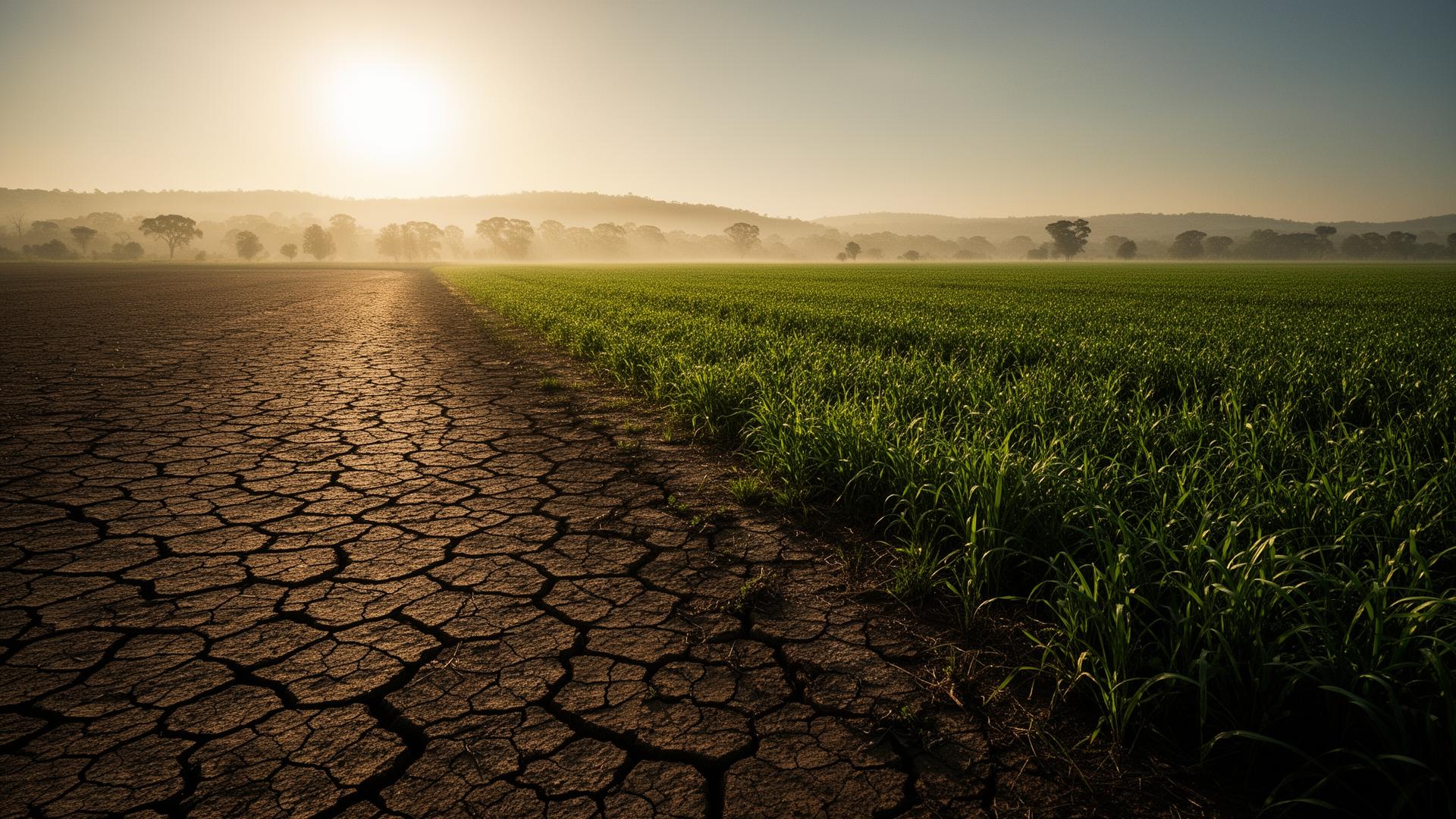
The Atlantic Meridional Overturning Circulation — AMOC — is the planetary-scale conveyor that moves warm surface water northward from the tropics and returns cold, dense water southward at depth. It is what makes Western Europe roughly 5°C warmer than its latitude would otherwise suggest, and its long-term stability is one of the more consequential open questions in climate science.
The 2026 update, drawn from the OSNAP, RAPID, and newly commissioned AMOC-West arrays, narrows the uncertainty range meaningfully. The combined dataset now shows a measured weakening of roughly 14% relative to the 1950 to 1980 baseline, with statistically significant trend signal emerging from natural variability for the first time in the continuous instrumental record.
Where the new data departs from the 2019 IPCC AR6 picture is on the timeline for potential collapse. Ditlevsen and Ditlevsen's 2023 statistical analysis — which generated headlines suggesting collapse as early as 2025 — has been substantially revised in a 2026 preprint from the same Copenhagen group, incorporating the new array data and acknowledging methodological criticisms. The central estimate is now a range of 2055 to 2095 for a potential tipping event, with substantial probability mass extending into the next century.
That is not a reassuring revision. It is a more honest one. The mechanism of concern — freshwater input from Greenland melt diluting the dense water formation regions in the Labrador and Irminger Seas — continues to track within the upper range of model projections. The Greenland ice sheet lost an estimated 280 gigatonnes of mass in 2025, the third-highest annual total on record.
The policy-relevant point is that AMOC weakening is not a binary tipping event waiting to happen; it is a gradient that is already detectable in European weather statistics. The 2024 winter storm Hugo and the 2025 summer drought across the Iberian peninsula both fall within the envelope of behaviors that weakening AMOC strengthens. The question is no longer whether the circulation is slowing, but how much further it will slow, and how fast.